The first days,
cell by cell.
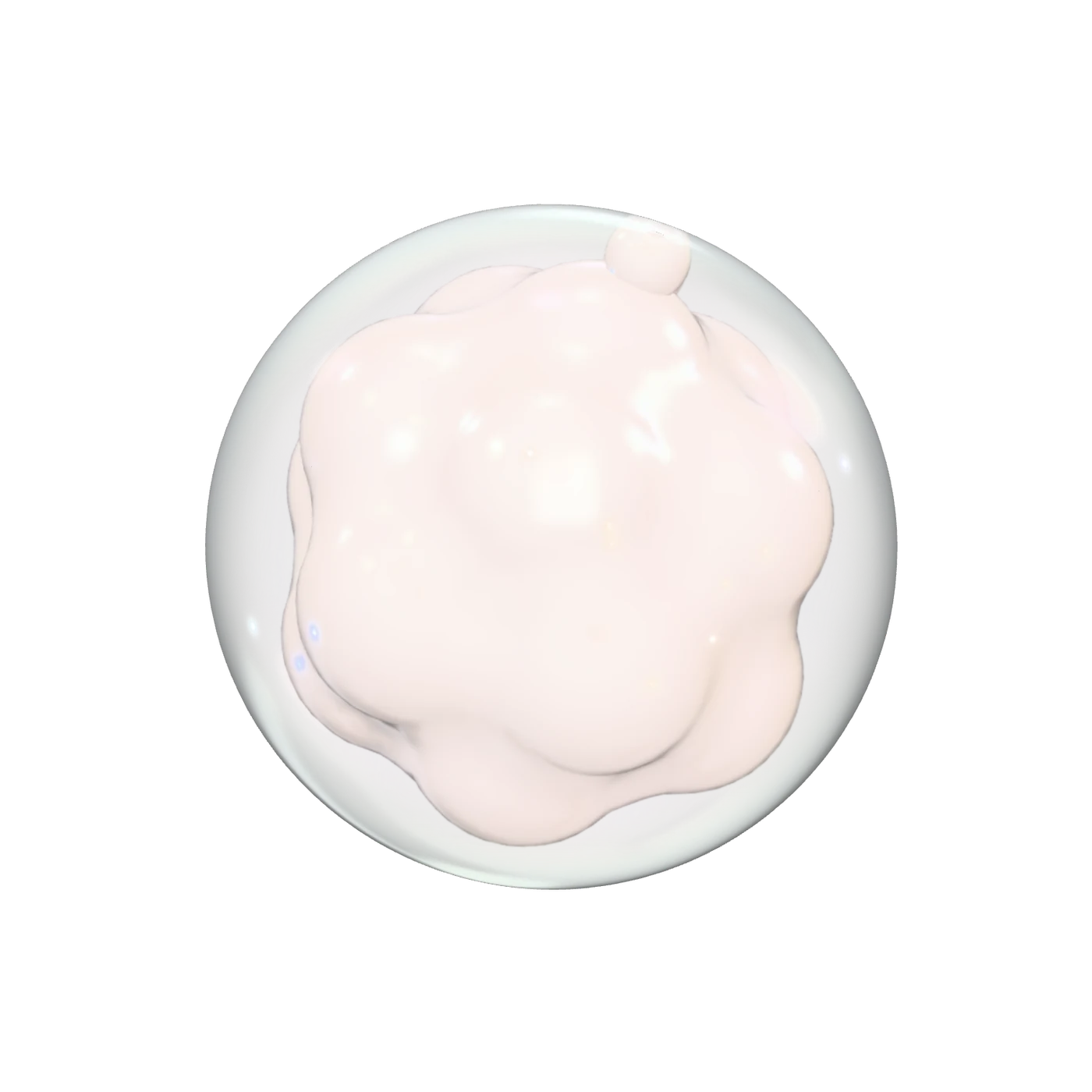
Morula is the demo website of a fictional fertility clinic in Munich. The page is light, the name runs across its full width, and in front of it floats an embryo of pearl-like cells inside a thin glass shell, the zona pellucida, which refracts the letters behind it. Further down, scrolling drives the first six days, from the fertilised egg to the blastocyst that hatches from its shell.
A demo, not a client
Morula is not a real clinic and has no patients, so we publish no outcome figures for it. Like our other demos, every page carries the bar “Demo-Website von FIB Consulting · fiktive Praxis”, search engines do not index it, and the legal notice names the actual operator, FIB Consulting. It also lists what a real fertility clinic would state there in addition, among other things the permit for assisted reproduction under § 121a SGB V and the licence under § 20b and § 20c of the German Medicines Act for procuring and processing germ cells; as a fictional clinic, Morula has none of them. The address, Beispielweg 12 in Munich, is fictional, and the phone number is a drama number from the range the Bundesnetzagentur reserves for media productions, so it is assigned to no one. The name comes from the fourth day: the cells press closely together and the embryo looks like a small mulberry, in Latin a morula.
A pearl of cells in a shell of glass
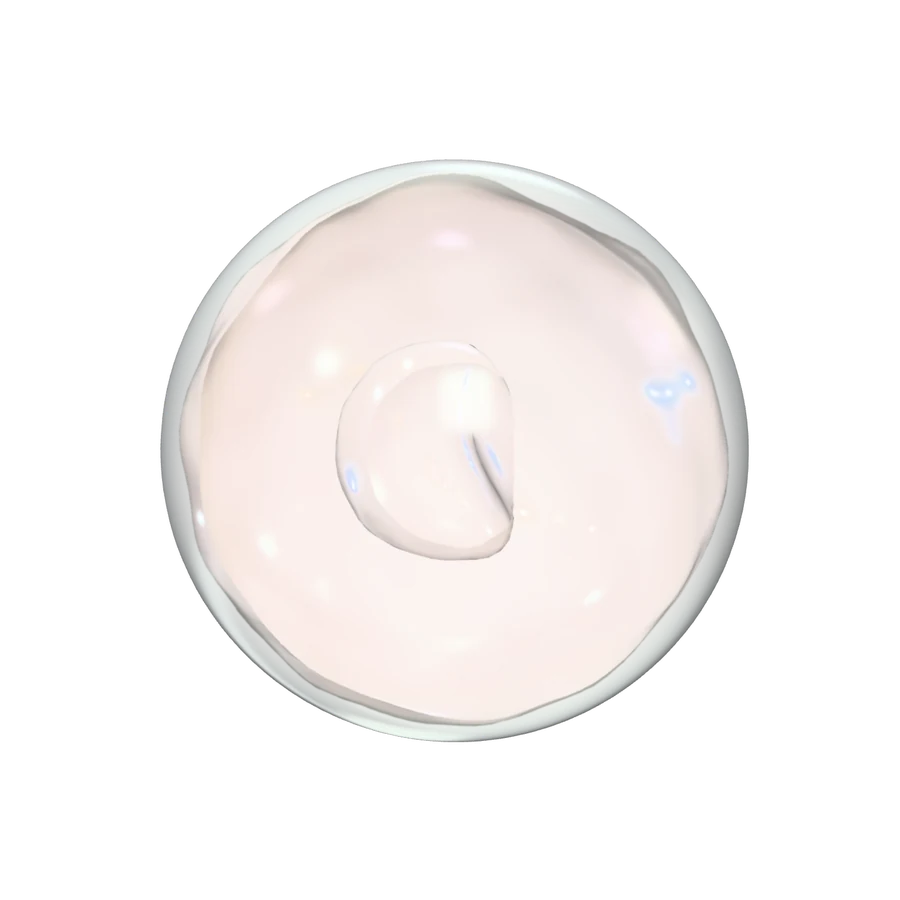
The cover follows the idea of Fimbria and Systole: the name across the full width and in front of it an object instead of a photograph. Here the page is light, almost white with a cool tint, with rose and blue as accents, and the object is the embryo, our own model, computed in the browser. Its cells are soft, pearl-like shapes with an iridescent sheen that merge where they touch, and they sit in a thin sphere of glass, the zona pellucida. The name is drawn into a texture behind the scene, so the glass really refracts the letters, and behind the embryo a soft glow runs from rose to blue. A small glass label names the stage that is on screen. Text and headings are set in Manrope, the labels in DM Mono, both under the SIL Open Font License and served from our own server. No serif and no italics in headings.
The first days in 3D
When you scroll, the same embryo moves from the cover into the story “Die ersten Tage”: six cards, day 1 to day 6, and beside them a column in which the model divides as you scroll past the cards. Day 1: one cell with two pronuclei, which the laboratory checks 16 to 18 hours after fertilisation; the embryo is about a tenth of a millimetre across. Day 2: two cells, then four, usually about 44 hours after fertilisation; the cells get smaller with every division while the embryo keeps the size of the egg. Day 3: about eight cells. Day 4: the cells press so closely together that their borders almost disappear; this is the morula. Day 5: the blastocyst, on average about 60 cells, with a cavity filled with fluid inside; a window cut into the model shows the cavity and the inner cell mass, which later becomes the child. Day 6: the blastocyst expands, the shell grows thin and tears, and the embryo hatches. Each card has its sources, among them the Istanbul consensus of ESHRE and ALPHA (2025) and a laboratory study in which 42% of normally fertilised embryos reached the blastocyst stage (Hardy 1989). On phones the model sits in a box that stays at the top of the screen above the cards. On the cover it runs through the days by itself in a slow loop. The legal notice says plainly that the embryo is schematic: the number of cells, the shape and the colours are simplified.
Facts with sources
For the chances of success, the site uses the German IVF register (D·I·R), in which 139 of 142 centres document their treatments, 134,281 cycles in 2024 alone. Two charts from its 2024 yearbook show births per embryo transfer by the woman's age, IVF 2019 to 2023, from 34.8% for women under 30 to 0.9% from 45, and clinical pregnancies after one to four transfers, cumulative by age group, 2020 to 2023; each chart has a table with the same numbers for screen readers. The chances page adds miscarriages by age and says why the clinic shows no success rate of its own: the register may not publish results of individual centres, and the Heilmittelwerbegesetz forbids suggesting that success is certain.
For the costs there is a calculator: you enter the insurance, marital status, both partners' ages, the procedure and the health insurer and get an estimate of the out-of-pocket cost per cycle; nothing is stored or sent. It follows § 27a SGB V and the guideline of the Federal Joint Committee: statutory insurance pays half of a treatment plan approved in advance if the couple is married, only their own eggs and sperm are used, both are at least 25, the woman is under 40 and the man under 50, for up to three IVF or ICSI attempts. It deducts the 500 euros per attempt that AOK Bayern and Techniker Krankenkasse add, uses the self-pay prices from familienplanung.de of the BIÖG (until 2025 the BZgA), explains for private insurance whose policy pays, and notes that the Bavarian support programme was stopped in February 2024. What is binding, the page says, is the written cost plan before treatment (§ 630c BGB).
The other pages cite their sources too, among them the procedure page with the laboratory times of the Istanbul consensus and the risks in numbers, and the pages on freezing, on the law under the Embryonenschutzgesetz and on counselling. No superlatives, no promises of success, no testimonials and no symptom checker.
Booking that ends with a ticket
Patients choose the reason, from the first consultation of 60 minutes, best attended as a couple, to cycle monitoring, a semen analysis or advice on freezing, then the day and the time, and leave only a name and a phone number or e-mail; the form asks them not to mention findings, diagnoses or earlier treatments. The confirmation is a holographic ticket, pearl white with a rose-and-blue sheen, whose stub tears off, by dragging or with a button, into a calendar entry with a neutral title, without the name and without the reason. In the demo nothing is sent.
The same standard as the live sites
Morula has the same foundation as our other websites: a notice of absence worded like the sign on the practice door (here it adds that treatments under way go on, including cycle monitoring and egg retrievals), opening hours with a live status, the next free times for a first consultation and forms without health data. Fertility medicine is not an emergency specialty, but every page says what to do with severe pain or bleeding after an egg retrieval outside opening hours: 116 117, the German out-of-hours medical service, and 112 when life is at risk. Without a capable graphics chip the cover shows a still image of the morula and the story a still image per day, with the same texts; with reduced motion set in the system, the embryo neither turns nor divides by itself. The site sets no cookies and does no visitor tracking, and the automated accessibility check (axe) finds no errors on the pages.
Try it (in German): Morula · the first days in 3D · the cost calculator · booking with the ticket.
Planning a website for your practice? See what our websites for doctors include, or get in touch.
A website that explains more than text.
Clear, factual and within the rules for healthcare advertising. Tell us what your practice needs.
Get in touch →